
Money Laundering: Crackdown Intensifies
The Ukrainian cases, record seizures, a strengthened public prosecutor's office, intensified international cooperation…Faced with increasingly sophisticated and globalised financial crime, the Principality, seeking judicial credibility, has modernised its tools and stepped up its crackdown.
A former Ukrainian MP and his ex-wife are on trial for laundering millions of euros of embezzled public funds*, before investing in luxury real estate in Cap-Martin through an international network of shell companies, notably in Dubai. A former president of the Supreme Court has been indicted for influence peddling, corruption, conflict of interest and money laundering in connection with the so-called Dossiers du Rocher. An investigation is still underway into money laundering at the Banque Pasche, following a 2013 whistleblowing by three employees who were quickly dismissed. These highly sensitive cases are no longer exceptions. At the formal opening of the judicial year, Attorney General, Stéphane Thibault, announced approximately 100 preliminary investigations into money laundering, including some 10 major cases, compared to only four the previous year. Seizures are following the same, upward trend: nearly €120 million of assets (cash, bank accounts and real estate) are now under judicial control, in addition to nearly €500 million already seized by investigating magistrates. Symbolic of this increased activity, two buildings acquired for approximately €10 million in 2017 and 2018 were definitively confiscated in July 2025 by the Court of Cassation in an aggravated money laundering case and will soon be sold by the state - a strong signal to both those involved in the legal system and international observers.
Regulation to Operation
The first step in this intensified crackdown on money laundering was legislative. Since 2023, four major laws, known as the MONEYVAL laws, have addressed structural gaps in the fight against money laundering and terrorist financing. However, as Secretary of State for Justice, Samuel Vuelta Simon, points out, the issue is no longer solely legal: "Today, we must prove the effectiveness of our actions. The core of the matter is now operational, quantifiable and measurable." This logic permeates the entire judicial strategy. An annual report from the public prosecutor's office, including a section specifically dedicated to money laundering (open investigations, prosecutions initiated and requisitions) is destined to become a central steering tool for engaging in dialogue with the Financial Action Task Force (FATF). "We have already transmitted a significant amount of data to international bodies," emphasises the Secretary of State, embracing a results-oriented governance approach and circulars on criminal policy.
Justice System: Specialised and Strengthened
The most visible structural shift remains the January 2025 creation of an economic and financial section within the public prosecutor's office. Reinforced since September by two specialised magistrates seconded from France, the court has grown from six to eight magistrates, a significant gain in a French context marked by a shortage of qualified professionals. “Obtaining two additional magistrates from France today is huge,” stresses Samuel Vuelta Simon.
Those recruited reflect a deliberate move upmarket: former heads of financial divisions; magistrates from the Specialised Interregional Jurisdictions and National Union of Anti-Corruption Units; and experts in organised crime and complex financial structures. The objective is clear: to centralise financial expertise, streamline cooperation with SICCFIN and foreign authorities and structure a genuine prosecution strategy.
Bonus: Criminalisation of Independent Money Laundering
Operationally, one of the decisive reforms remains the introduction of a genuine preliminary investigation framework under the authority of the Attorney General. Previously limited to cases of flagrant offence, the public prosecutor's office now has a tool enabling it to act swiftly, secure evidence and, above all, seize suspicious assets. "This is a very clear boost to public action, when we need to act very quickly to preserve evidence and prevent people from fleeing," acknowledges the Secretary of State. In the 2024-2025 period alone, €83 million was seized under this framework.
In addition, there is the criminalisation of independent money laundering, which facilitates criminal classification as soon as objective indicators are met. Anyone entering or leaving the Principality with €10,000 or more in cash (already a considerable sum and includes precious metals like gold) can indeed be subject to police investigations and seizures if the origin is questionable. "When you're stopped with a suitcase full of cash hidden in the trunk as you cross the border, we don't assume it's to buy cigarettes," remarks the Director of Judicial Services.
Decidedly International Justice System
In Monaco, financial cases are almost exclusively international, often triggered by information from abroad. "The problem in Monaco is that the money almost always comes from outside," notes Samuel Vuelta Simon. Money laundering of unknown origin, real estate acquisitions, corruption...hence the strategic importance of judicial cooperation. The number of mutual legal assistance requests has risen from around 40 in 2023 to nearly 180 today, whilst average processing times have been halved. Monaco's membership of the European Judicial Network now facilitates direct exchanges between judges. "It's very practical and it works very well," he sums up.
For more complex areas such as the United Arab Emirates, Asia and Central America, the Principality is working on targeted bilateral agreements "to establish a more robust channel" and secure transnational investigations.
Sustainable Credibility
Other measures are being developed, like the expansion of special investigative techniques, such as interviewing anonymous witnesses, wiretapping, telephone tapping for a specific period and infiltration and the introduction of negotiated justice mechanisms inspired by French public interest judicial conventions, in order to expedite proceedings and obtain economically dissuasive sanctions. “Ten years of legal proceedings or a billion euros recovered immediately - sometimes the choice is easy! The Paris public prosecutor's office, for example, proposed, as part of a plea bargain with UBS bank, at the heart of a case involving aggravated money laundering, tax fraud and illegal banking practices, to waive certain administrative sanctions in exchange for an immediate payment. They accepted. [Editor's note: After 14 years of complex legal proceedings, the banking group was fined €730 million and ordered to pay €105 million in damages to the French state]. This avoids embarking on years of further legal proceedings,” observes Samuel Vuelta Simon, who is also counting on the beneficial effects of creating the judicial reserve. “This reserve of judges, who can be called upon to help us form panels to judge cases, will also benefit time-consuming money laundering cases. Some financial cases require 15 days of hearings.”
The time factor remains a concern. An international financial case rarely takes less than six years to reach a verdict. Additional staff, specialised personnel and a judicial reserve must be established to handle the increasing workload. "The justice system is not as fast-moving as the media," he acknowledges, whilst remaining confident in the medium-term results.
By Milena Radoman - Monaco Economie
* The verdict has been postponed to 20 January 2026.
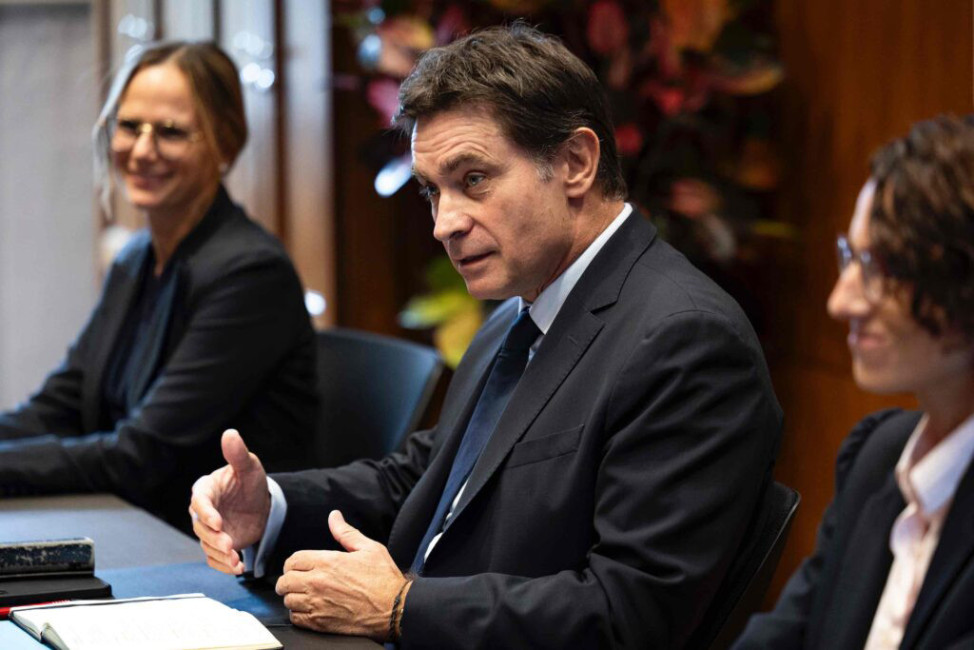
Simon Vuelta, Secretary of State for Justice
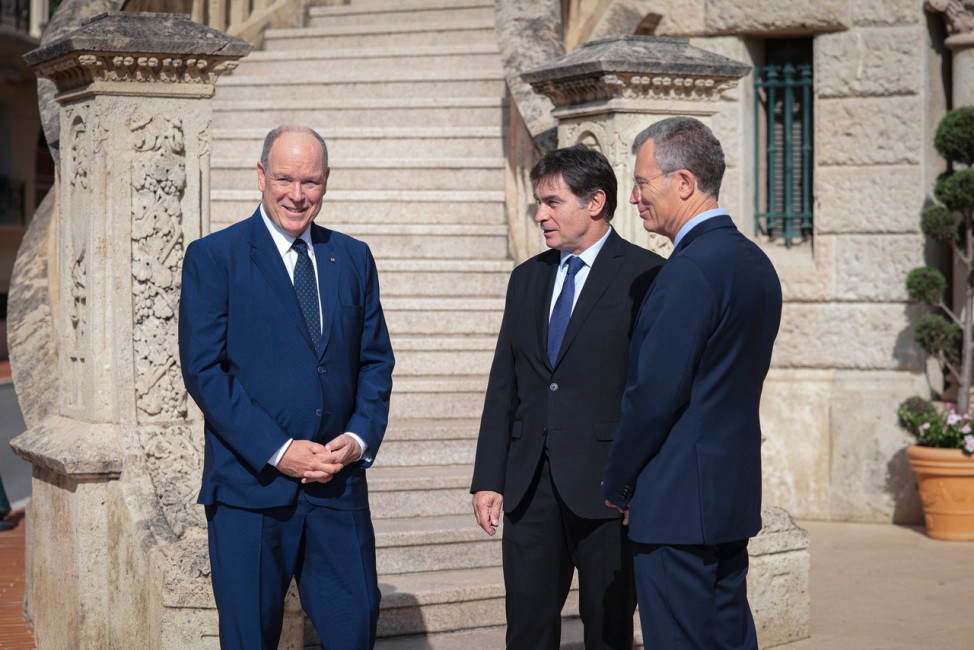
HSH Prince Albert II, Simon Vuelta, Secretary of State for Justice, Christophe Mirmand, Minister of State.
Some Figures
The asset management service is handling 185 cases involving 416 seized or confiscated assets with an estimated value of over €400 million: real estate valued at €160 million; €200 million in bank accounts; €40 million worth of vehicles; as well as Hermès bags, cigars, jewellery, bottles of wine…In total, €17 million has been paid to the TGF, the final revenue for the state amounting to €1.53 million.
In the completed cases, 22 bank accounts (€41 million) were reimbursed, 87 sums of cash (€415,000) were deposited with the Treasury and 43 assets were donated or destroyed.