Club Eco Monaco: overseas investments, a key driver of Monaco’s prosperity
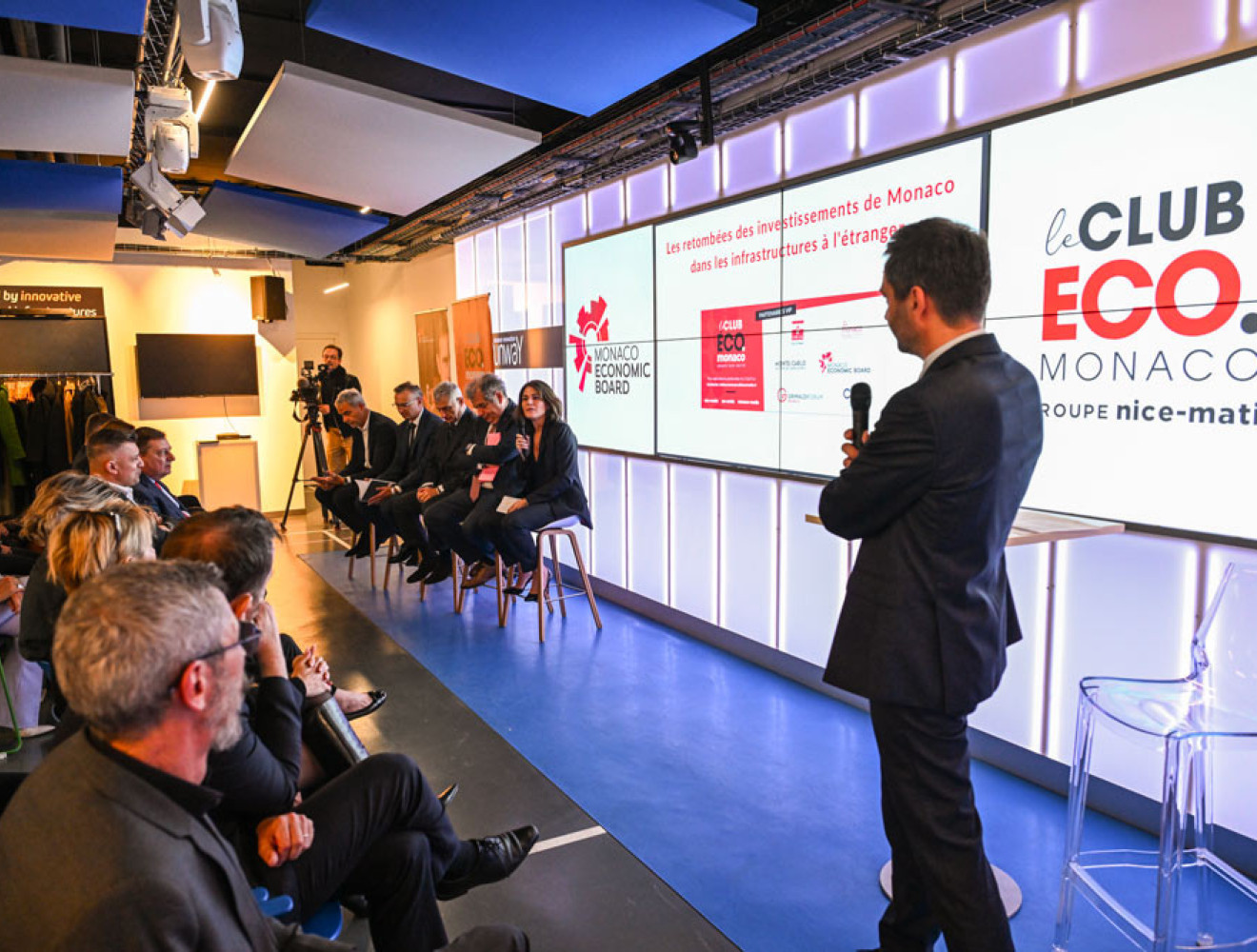
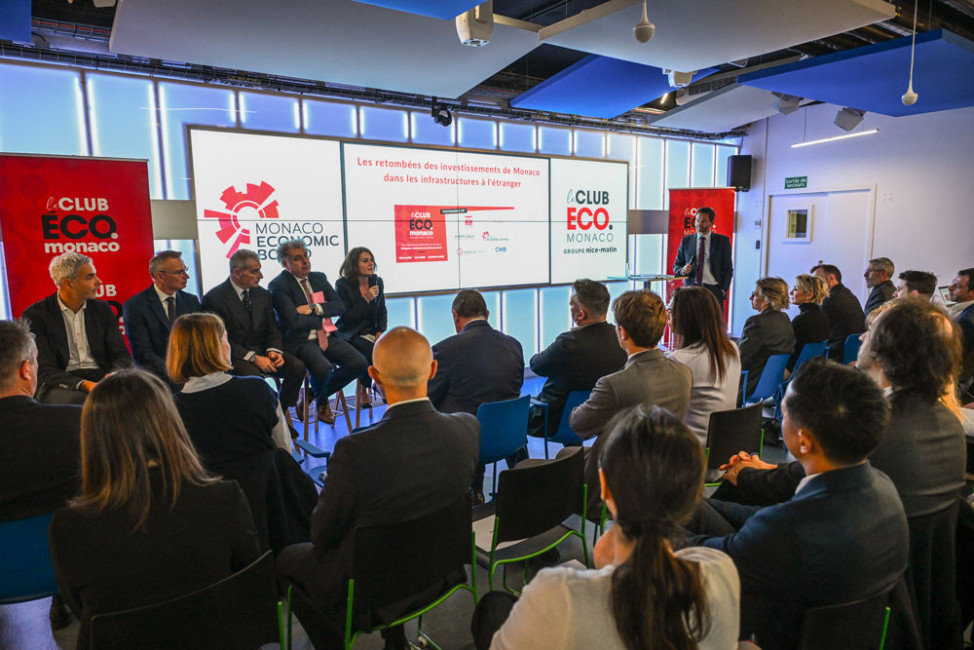
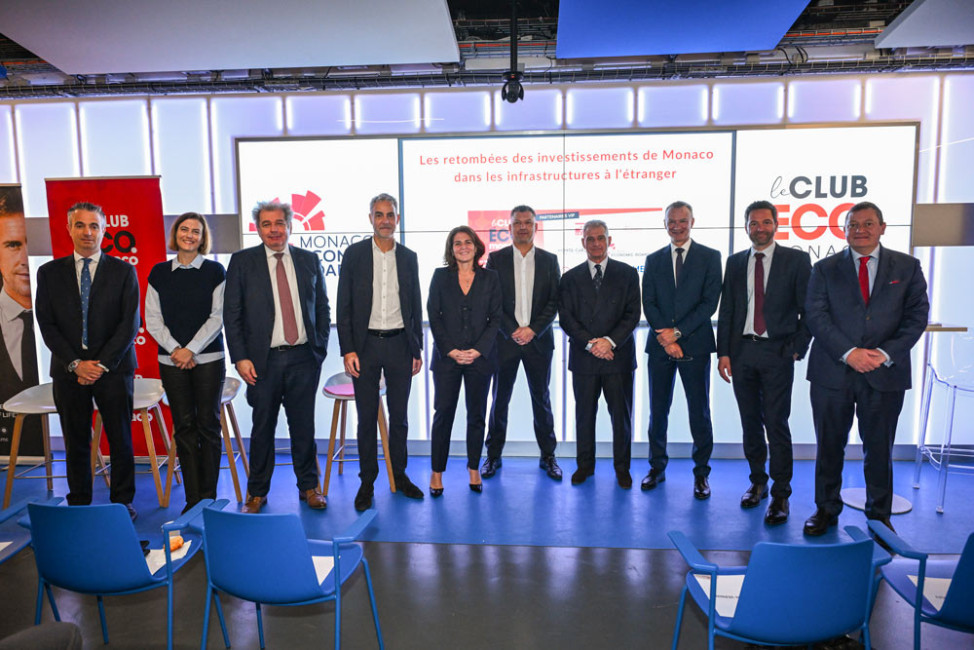
On Thursday, 5 March, at MonacoTech, the Monaco Economic Board and the Nice-Matin Group held, as part of the Club Eco Monaco, a conference on infrastructure investments made by the Principality abroad, either directly or through companies in which it is a shareholder. The benefits are multiple.
Moderated by Baptiste Bize, Editor-in-Chief of the Nice-Matin Group, the conference took the form of a round table, allowing the various speakers to present the many facets and advantages of the Principality’s investments in infrastructure at international level.
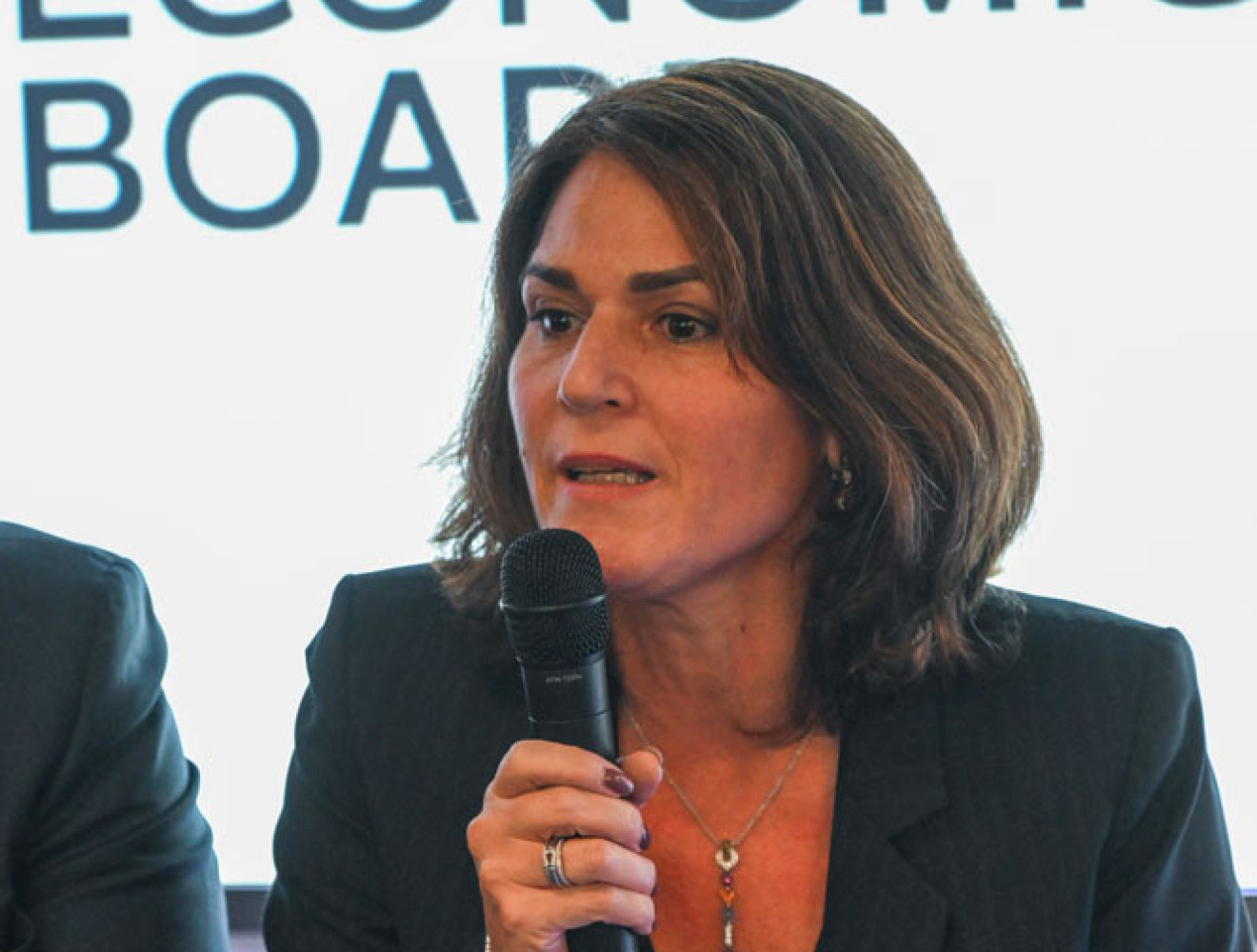
The Prince’s Government was represented by Laetitia Faix, Director of the Budget and Treasury Department, who opened the discussion by outlining the various levers available to the State: the budget, the Constitutional Reserve Fund (FRC), stakes held in Monegasque companies, in particular public service concessionaires, and the acquisition of interests in foreign companies that lie at the heart of Monaco’s economic development strategy, such as its shareholding in Aéroports de la Côte d’Azur. This can also take the form of bets on the future, such as the stake in the French start-up Flying Whales, which has devised a low-carbon freight solution using an airship cargo with a capacity of 60 tonnes.
Beyond Monaco’s goals in terms of energy transition, improved mobility and, more broadly, attractiveness, Laetitia Faix stressed that these investments also support growth in neighbouring regions. These include residential buildings financed by the Principality in nearby municipalities to house State employees, and the substantial investment of 180 million euros alongside the Provence-Alpes-Côte d’Azur Region to improve rail services for employees, notably through the acquisition of six new TER trainsets.
Another key aspect of mobility is air transport, with infrastructure that, according to Franck Goldnadel, Chairman of the Management Board of Aéroport Côte d’Azur, must serve the region. This is why, alongside private shareholders, institutional players, including Monaco, were keen to be in a position to take part in decision-making. The Principality, a demanding shareholder, has a particular influence on connectivity, service quality and environmental commitments. On the latter point, Nice Airport is the most advanced in France in terms of decarbonisation, as confirmed by several leading labels. This is a win-win policy, he believes, “because Monaco’s attractiveness supports the airport’s attractiveness and vice versa”. And this translates into economic activity: according to an impact study, the GDP generated by the airport for Monaco is estimated at 400 million euros.
As a maritime nation, the Principality is closely tied to the sea; but despite having two ports within its constrained territory, it has had to look for complementary solutions. Aleco Keusseoglou, Deputy Chairman of the Société d’Exploitation des Ports de Monaco (SEPM), recalled the rare opportunity that arose in 2016 with the Cala del Forte marina in Ventimiglia under an 80-year concession. Despite unforeseen events (Covid and the war in Ukraine), the project was completed and made it possible to expand a capacity that had been insufficient, particularly for vessels over 35 metres. However, demand remains strong: “Of every four ultra-high-net-worth individuals in the world, at least one owns a yacht,” noted the Deputy Chairman. The next project could take shape at Cap d’Ail harbour, whose concession expires in 2027.
Perhaps even more so, energy is also a strategic issue for the Principality, whose production and distribution are delegated to SMEG. But this concession extends beyond the borders of the Principality. One example is its subsidiary EVZen, which develops electric vehicle charging stations throughout France, an activity that enables the company to diversify its expertise and enhance both its attractiveness and its profitability. Another investment avenue highlighted by SMEG’s Managing Director, Thomas Battaglione, is the acquisition or construction in France of several photovoltaic plants and wind farms through a joint venture with the Prince’s Government: Monaco Energies Renouvelables. One hundred million euros have already been invested, and this is set to continue. The aim is to guarantee the complete decarbonisation of the energy consumed in the Principality, while also ensuring its sovereignty, notably by keeping control of prices in times of crisis.
Monaco Telecom, jointly owned by the State and NJJ Holding (owned by Xavier Niel), has historically focused on international markets. Today, the company is expanding across the Mediterranean, as 100% shareholder of Epic, the leading alternative operator in Cyprus and the leading mobile operator in Malta. Its CEO, Martin Péronnet, explained that these acquisitions have brought several benefits. “We rolled out the operational model we had developed in Monaco, thereby improving the efficiency of these companies and, consequently, their market shares.” As a result, international activities now account for the majority of Monaco Telecom’s revenues, enabling it to offer high-quality services in the Principality. Another aspect concerns skills. By expanding its operations, Monaco Telecom is better able to attract the talent it needs for its growth. From Monaco, the company now manages all the information systems of the NJJ Holding group as well as the international mobile traffic of the group’s operators.
Following these concrete examples, the discussion continued with a particularly rich Q&A session, underlining the breadth of the topic. A topic which, as projects unfold, is set to continue to grow. That is why the Monaco Economic Board’s CEO, Guillaume Rose, proposed revisiting this theme on a regular basis and including tourism, given how developments in these activities will bring fresh strategic challenges.
@MEB / Sébastien Darrasse
@MEB / Sébastien Darrasse