From global geopolitics to financial markets, Jean-Pierre Petit presents his incisive analysis in Monaco
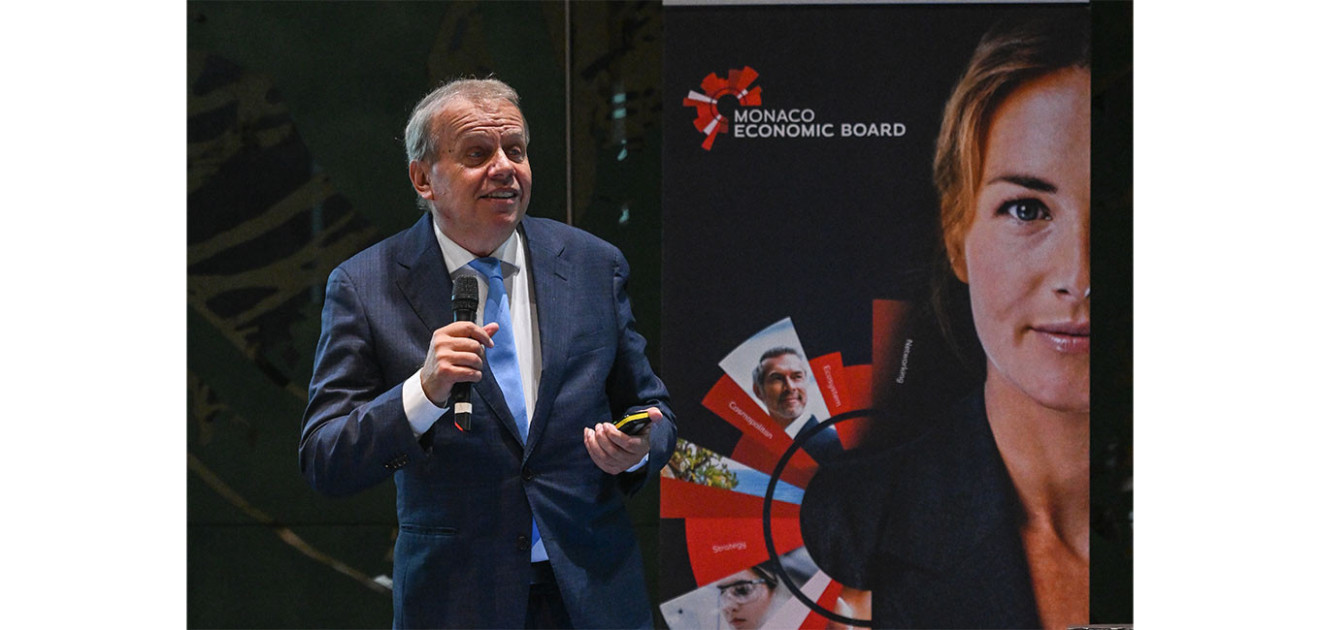
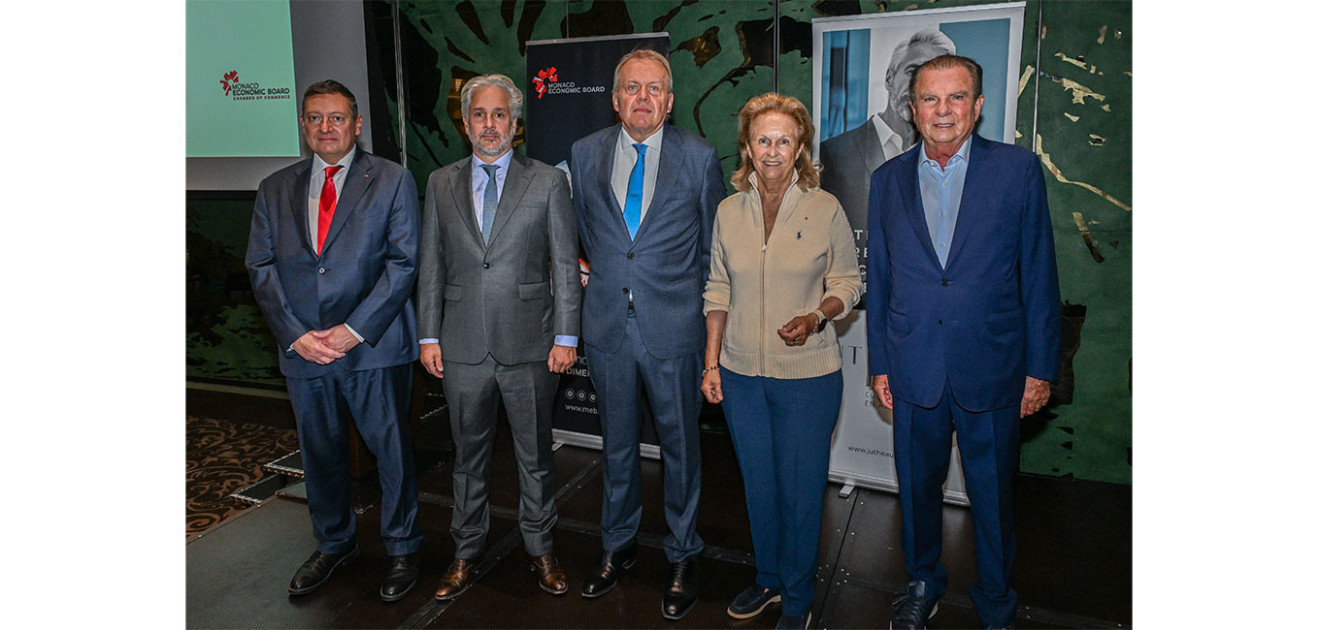
On Friday, 11 September 2026, the Hôtel Hermitage Monte-Carlo hosted the major economic conference to mark the start of the new season, organised by the Monaco Economic Board (MEB) in partnership with Jutheau Husson, an insurance brokerage and consultancy firm. For the ninth consecutive year, Jean-Pierre Petit, Chairman of Les Cahiers Verts de l'Économie, explored the major global geopolitical macroeconomic and financial issues before an audience of Monegasque decision-makers.
An excellent speaker, sometimes slightly provocative and eager to prompt a reaction from his audience, Jean-Pierre Petit lived up to his reputation by portraying an unflinching view of our era.
The economist began his remarks by emphasising the significant resurgence of conflict worldwide, recalling that prolonged wars are not a new phenomenon—such as the conflicts between ancient Greece and Persia, or the Hundred Years' War—and noting that the hybrid conflicts we are witnessing with increasing frequency are also becoming more entrenched.
He also emphasised the self-paralysis of traditional democracies in the face of the rise of authoritarian models, which are benefitting from their strategic resources and speed of decision-making.
With his usual straightforwardness, Jean-Pierre Petit provided a worrying assessment of the situation in France. He highlighted a public debt expected to continue rising, reaching 130% of GDP around 2030, and criticised a significant economic decline. The economist even went as far as to suggest the possibility of an "Argentinian scenario" for France, associated with structural decline, inefficiencies in administration, and political incapacity to curb public spending.
On the broader macroeconomic landscape, the assessment was more nuanced. The global economy is demonstrating a relatively favourable trajectory, primarily driven by productivity and corporate profitability in the United States. Regarding the US mid-term elections, it was noted that, historically, these deadlines and the periods of political "cohabitation" they often bring have generally been favourable to stock markets, although they can also induce volatility.
In the final part of his intervention, Jean-Pierre Petit became more technical, focusing on the evolution of interest rates and financial markets, in a context marked in particular by geopolitical tensions in the Middle East.
Long-term rates continue to be high, with a particularly noticeable increase in US real rates. However, the economist does not necessarily view this development as a precursor to a sharp fall in equity markets.
Jean-Pierre Petit believes, however, that stock market valuations remain high and that the market exhibits certain signs of a "bubble", though it has not yet reached the peak of the bubble. He urges caution, particularly regarding technology stocks and expectations related to artificial intelligence. However, the current situation differs from the internet bubble of the 1990s, mainly because the market has so far remained rational and is distinguishing between promising and less viable companies by rewarding only those capable of concretely monetising their AI investments.
In conclusion, Jean-Pierre Petit supports a "neutral" investment approach over a six-month timeframe, applicable to both equities and bonds. However, he does suggest a few specific selections: for instance, considering European small-cap stocks, and keeping positions in gold and copper.
An intervention that was once again brilliant and stimulating, affirming the crucial role of the MEB and its partners in delivering strategic insights to the economic players of the Principality.
--------------------------------
Press contacts: Benoît Ulrich / Delphine Quilichini – presse@meb.mc
Photo credits: Sébastien Darrasse / MEB