MEB: “The ATA Carnet is the passport for your goods!”
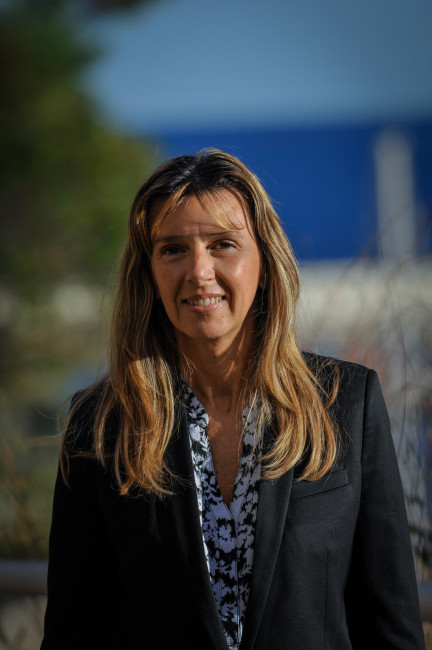
At the Monaco Economic Board (MEB), the International Trade Procedures Department processes more than 8,000 documents per year and works with over 300 companies. We spoke with manager, Karine Faloppa.
What is the purpose of the International Trade Procedures Department?
We offer all businesses in the Principality, registered with the Monaco Chamber of Commerce, support for exporting their goods, through a dedicated service for international trade procedures. This involves certified commercial documents that allow them to export goods outside the European Union, either temporarily or permanently. Since 2023, this service has gradually been digitalised through the dedicated website GEFI (Electronic Management of International Trade Procedures). This portal has been adapted so that the MEB can offer a service identical to that provided by all French Chambers of Commerce and Industry. On average, the department processes more than 8,000 documents per year and works with over 300 companies.
What advice would you give to a company exporting for the first time?
To contact us directly so that we can guide them through the process. Every export is unique. Our mission is to offer solutions tailored to the specific needs of businesses in the Principality. To do this, we work closely with other relevant stakeholders, starting with the French Customs Office in Monaco. As a reminder, the Principality, although not a member, is part of the European Union customs territory due to its customs union with France.
The ATA Carnet is one of your key tools. What is its practical use?
The ATA Carnet is the passport for your goods! It guarantees all the necessary procedures for temporary export and thus allows for exemption from customs duties outside the EU – a very useful feature when companies want to test equipment at a specific location, participate in a trade fair or exhibition, or even prospect for clients using commercial samples or prototypes. One of our regular clients, for example, is the Monte-Carlo Ballet, which uses ATA Carnets for transporting the stage equipment used on international tours. Furthermore, we also handle other types of commercial documents, which are sometimes required for exports: for example, certificates of origin, which are used to trace the geographical origin of the various components of a product – an important factor in determining the "Made In" origin of each product.
How do you support companies facing international restrictions or sanctions (for example, regarding trade with Russia)? Do you have an example of successful support provided?
As the International Trade Support Service of the Chamber of Commerce, our role is not to provide comprehensive end-to-end support to companies with export needs. For that type of support, there are specialised companies, including in Monaco, that offer these services and they are regular contacts for our department. Our primary function is to provide official documentation, in accordance with the regulations in force in the Principality and internationally, regardless of the country. This is the area where our support is most effective. In addition, we help companies identify the relevant contacts based on their specific situation.
The United States is increasing certain customs duties. Have you observed any changes in procedures or questions from companies exporting to this strategic market?
We did receive inquiries when the new tariffs were announced by the US President on 2 April. The situation was unclear. Although there is still some uncertainty, companies have since learned to adapt to the changing circumstances. In addition, it should be noted that trade with the United States represents only a small portion of the Principality's overall trade, particularly regarding exports - less than 2% in 2024, according to IMSEE. Therefore, the impact - if any - of these new tariffs will be limited for Monaco.
In a context where regulations are changing rapidly, how does your department anticipate these changes to prevent companies from being caught unprepared?
The digitalisation of most of our services through the GEFI portal has allowed us to adapt quickly, thanks to our ongoing dialogue with our partners, starting with the Paris Chamber of Commerce. In addition, my team members receive in-person training at least once a year to ensure they are fully informed about all the latest developments. Along the same lines, we maintain regular contact with the Monaco Customs Office, which is also an essential partner for import-export businesses.
In recent years, there has been much discussion about protectionism and trade barriers. Do you see any impact of this in your interactions with local businesses?
We sometimes see this reflected in our statistics. Indeed, depending on certain changes in customs regulations, whether they involve increases or decreases, we can observe an impact on the number of requests for documentation. We can assume that businesses adapt to these changes to remain competitive.
Do you think that the increasing complexity of international trade strengthens the role of the department you lead, as a key contact point for ensuring smooth business operations?
What we can say is that in a more dynamic environment, businesses have become more vigilant. Therefore, our role is, to a certain extent, to advise them and reassure them by providing guidance on best practices and supplying the necessary documentation. Also, more broadly speaking, the MEB, as an economic development agency, can also support businesses. For example, during our trade missions or when hosting foreign delegations, business meetings are organised in collaboration with chambers of commerce or official authorities. This provides significant added value for businesses seeking to enter new international markets under optimal conditions.
By Milena Radoman - Monaco Economie