SIAMP-CEDAP: “Geographical diversification is our best safeguard.”
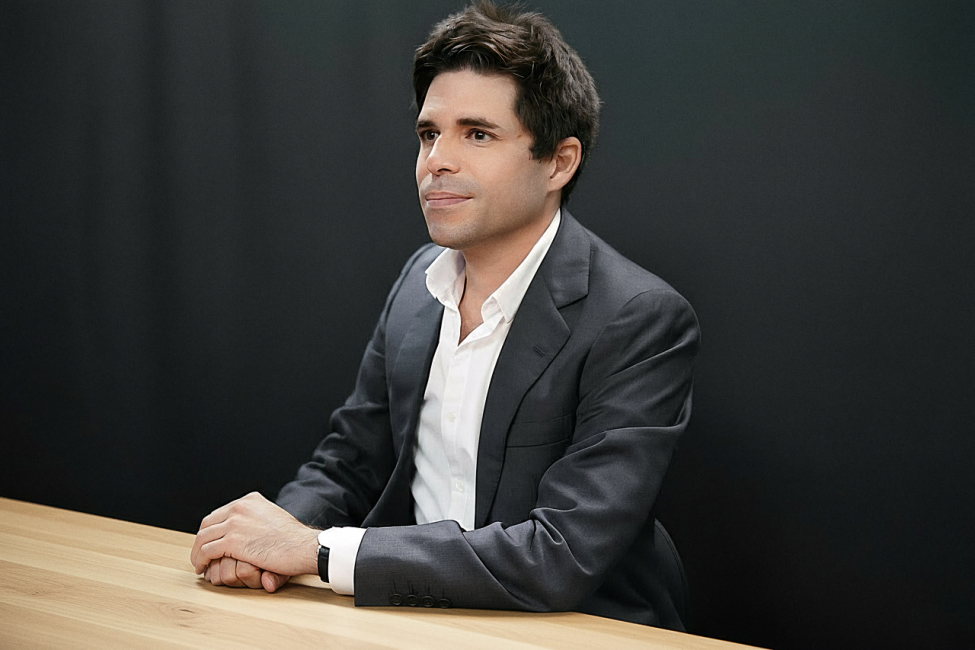
The Monégasque group, Siamp-Cedap, with over 1,000 employees worldwide, operates in some 50 countries, generating annual revenue of approximately €200 million. We spoke with Executive Director, Djivan Djierdjian.
How would you describe the mission and vision of Siamp-Cedap?
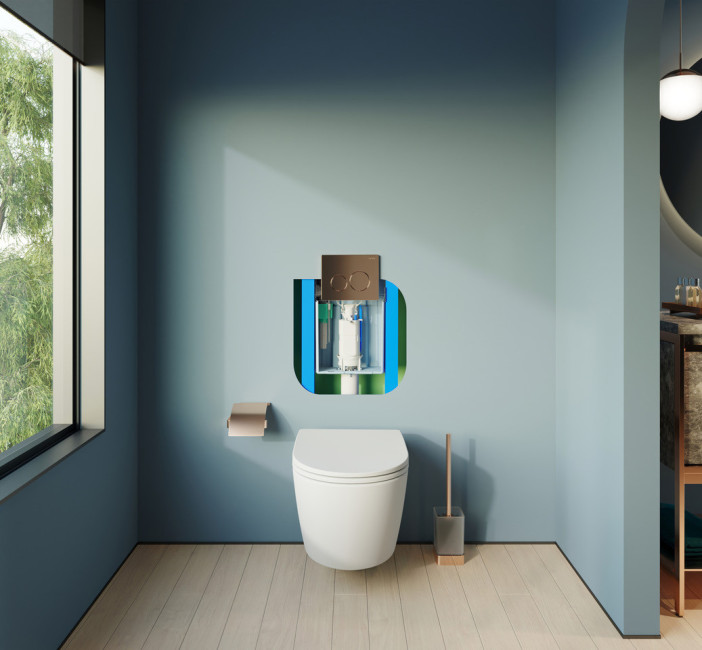
Our activities are clearly distinct: Cedap designs and manufactures packaging for the food industry, whilst Siamp develops innovative solutions for restrooms, such as flushing systems, cisterns and toilet seats.
Cedap's mission is to ensure an essential link in the food supply chain by guaranteeing both consumer safety and the ecological transition of packaging. For Siamp, we aim to make sustainable hygiene solutions accessible in all living spaces.
Our vision is to harmonise the quality of life we provide to millions of users with a positive environmental impact, to preserve resources for future generations.
These are two completely different businesses. What first led to this diversification?
The group was founded in Monaco in 1947. Today, I represent the third generation at the helm of this family business, which remains 100% independent.
Our two businesses share a common thread: the processing of plastics. In the post-war era, it replaced wood and ceramics in many products, thanks to its advantages in terms of safety, hygiene and design. At the time, Monaco, with its nascent manufacturing industry, was a fertile ground. Currently, as the Principality's industrial landscape evolves, we are adapting our strategy to stay in sync with the local reality, whilst expanding our global presence.
The group now generates annual revenue of approximately €200 million.
You are present on several continents. Where is your production located?
We employ just under 200 people in Monaco, working between our headquarters on the port and our production and R&D facility in Fontvieille. This modern, multi-story plant is a key asset. It's where we manufacture our highest value-added products. This is a major advantage for our big clients, such as Leroy Merlin, Castorama, Vinci and Bouygues, who value our proximity and responsiveness.
In total, the group has six manufacturing plants, with over 1,000 Siamp employees located internationally, as well as four Cedap plants in France, Belgium, Mexico and the United States. We currently operate in approximately 50 countries.
Have geopolitical crises, such as the war in Ukraine, the embargo on Russia, or the increase in tariffs in the United States, impacted you?
Our multi-site presence, particularly in the Americas, allows us to remain fully operational and offer suitable solutions, despite geopolitical fluctuations, whether it be the war in Ukraine, sanctions against Russia, or the strengthening of tariffs in the United States. This geographical diversification is our best safeguard.
Do you have any new targets for growth?
We are exploring several avenues, strengthening our existing subsidiaries but also considering acquisitions in related sectors. Our priority is innovation around key issues: water conservation in our sanitary solutions; and food safety in our packaging, whilst minimising our environmental footprint.
Water efficiency, particularly in residential and commercial buildings, is a major challenge that we want to address internationally.
Do you try and use recycled plastic materials?
Yes and we aim to integrate 10% to 30% recycled plastic, sourced from post-consumer products. This choice is rigorously respected, because the performance and safety of our products cannot be compromised.
Furthermore, we have taken a stake in an innovative PLA* manufacturer, which is a biodegradable and bio-based material, produced from wheat by-products. PLA eliminates the risk of persistent microplastics in the environment. It is a promising alternative to certain types of polystyrene and one which we are actively promoting to our customers.
Is that going well so far?
The main obstacle remains the cost: PLA is currently twice as expensive as conventional plastics. For our customers, who produce in large quantities, the price difference is a significant issue. The technology is available but the market will take time to evolve, given that consumers are very price-sensitive, particularly after periods of high inflation. The transition from petroleum-based resins to sustainable alternatives is a process that takes decades.
Nevertheless, there is an urgent need for action, as demonstrated by the conference on plastic pollution
Undoubtedly. As industry professionals, we have a major role and responsibility to accelerate this transition. Sometimes, we even need to be more ambitious than the lawmakers. The conference revealed a significant divide between oil-producing countries, reluctant to reduce plastic use, and countries committed to a more rigorous circular economy. Even so, incentive measures are emerging, such as in Spain, where a penalty applies to packaging that does not contain at least 10% recycled materials. Europe is also taking action through the PPWR directive, which imposes concrete obligations regarding recycling and the incorporation of recycled materials.
For Siamp-Cedap, the future lies in continuous innovation focused on recycled materials, reuse, biodegradability and extending the lifespan of our products.
Have you started your carbon footprint assessments?
Yes, our CSR department conducts this assessment annually. It guides our strategic decisions by identifying the key areas where we can reduce our climate impact. Specifically, the main lesson from our carbon footprint assessments is that we must focus our efforts primarily on the selection of raw materials. We are adopting a partnership approach with our suppliers to develop recycled, lightweight and biodegradable plastics, thus limiting both plastic pollution and greenhouse gas emissions. We are also implementing the Clean Sweep initiative in all our plants - a certified programme aimed at preventing the release of plastic pellets into the environment.
You have signed a partnership with the startup, FGWRS. Greywater reuse is still not permitted, except in rare cases, even in a world facing water scarcity. Why is that?
The use of greywater is very strictly regulated in France and Europe, with absolute priority given to public health, which is perfectly justified. The goal is to avoid any risk of contamination between drinking water, greywater and wastewater in building water systems - a fundamental principle. However, given the growing water scarcity, this safety measure must be combined with innovation.
*Futerro specialises in PLA production, owned by Finasucre, the sugar company of the Lippens family, and by the publicly-traded holding company, Bois Sauvage, owned by the Paquot family. The company plans to build a bioplastics plant in Port-Jêrome, Normandy, between Le Havre and Rouen, which should be operational by 2027. According to Ouest France, the plant aims to produce 75,000 tons of PLA annually. The project will require an investment of €500 million.
By Milena Radoman - Monaco Economie